
Last Updated on November 26, 2026
In travel photography, architectural photography and everyday snapshots, the final composition is not always decided at the moment the shutter is pressed. Decorative details on distant buildings, expressions on people’s faces in street scenes, or seemingly insignificant parts of a landscape may become the most interesting elements when reviewing photos later.
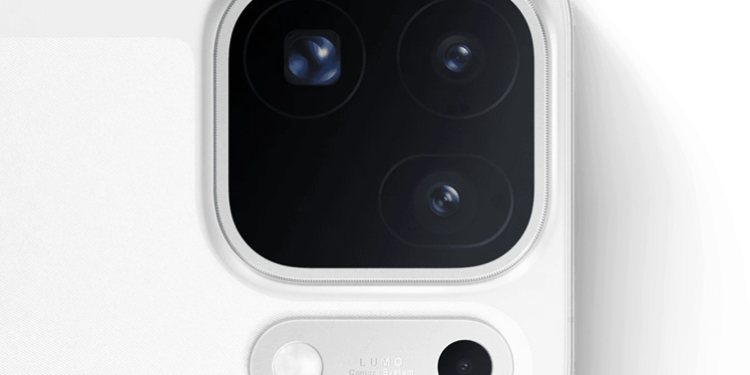
For users who frequently reframe their photos, the amount of image information retained during capture directly affects how much flexibility they have when cropping in post-production. The OPPO Find X10 Pro Max addresses this need by combining the Triple 200MP Camera System (Co-developed with Hasselblad), Ultra-Clear at Any Zoom and Hasselblad high-resolution imaging, extending high-resolution photography across multiple focal lengths rather than limiting it to a single camera.

Triple 200MP Cameras: High Resolution Across Different Shooting Distances
On traditional smartphones, high-resolution capabilities are often concentrated in the Main Camera. When switching to the ultra-wide or Telephoto Camera, image detail may change noticeably. The OPPO Find X10 Pro Max features the Triple 200MP Camera System (Co-developed with Hasselblad). All three cameras use 200MP sensors, covering 13mm ultra-wide, 24mm main and 70mm telephoto equivalent focal lengths.
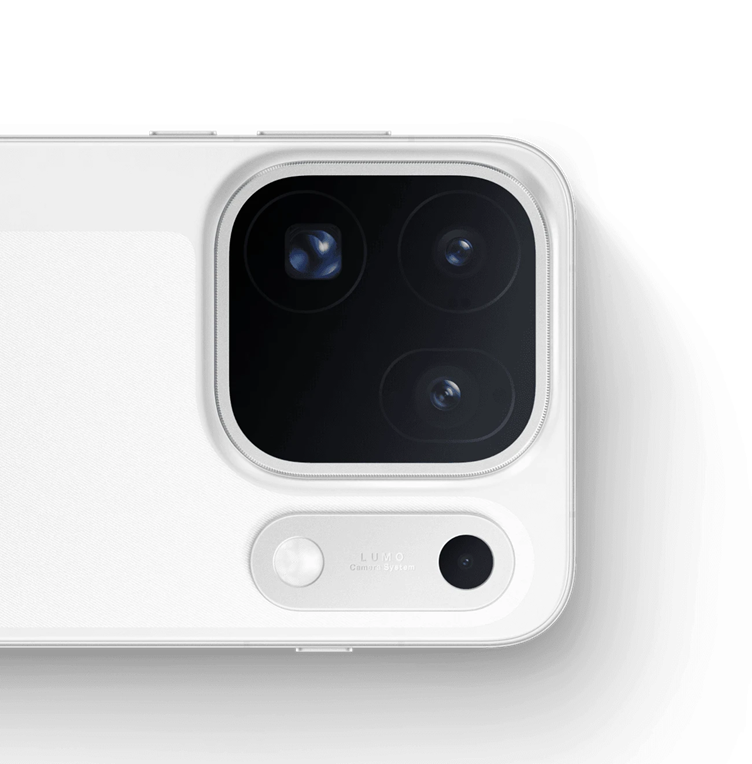
Each camera serves a different compositional purpose:
| Camera | Key Specifications | Suitable Photography Scenarios |
| Hasselblad Ultra-Wide | 200MP, 13mm, 124° FOV | Architecture, cityscapes and natural landscapes |
| Hasselblad Main | 200MP, 24mm, f/1.5, 1/1.3-inch sensor | Everyday portraits, street photography and challenging lighting conditions |
| Hasselblad Telephoto | 200MP, 70mm, f/2.1, 1/1.56-inch sensor, OIS | Distant subjects, architectural details and close-up shots |
The advantage of this configuration is that users can first select the appropriate native focal length according to the shooting distance, then use high-resolution photos for further adjustments in post-production.
LUMO Hyper Pixel Engine: Multi-Frame Fusion Goes Beyond Increasing Pixel Count
The quality of high-resolution photos is not determined solely by the number of sensor pixels. Exposure, noise, detail fusion and shooting conditions all affect the final output.
The OPPO Find X10 Pro Max features the LUMO Hyper Pixel Engine, which uses multi-frame fusion to improve photo output quality. Depending on whether Motion Photos is enabled, the system uses different image fusion methods:
| Shooting Mode | Multi-Frame Fusion Method |
| Live Off | Fusion of four 50MP frames |
| Live On | Fusion of five 12MP frames and one 50MP frame |
This also explains why having a high-resolution smartphone does not mean users must manually select 200MP mode for every photo. With the LUMO Hyper Pixel Engine, everyday zoom photography can also benefit from multi-frame processing to improve output quality.

Ultra-Clear at Any Zoom and Hasselblad Hi-Res: More Flexibility for Cropping in Post-Production
The OPPO Find X10 Pro Max also supports Ultra-Clear at Any Zoom, delivering high-resolution output of at least 25MP within the supported zoom ranges.
Specifically, with Motion Photos turned off, the supported range is 0.5x–9.9x. When Motion Photos is enabled, high-resolution output is supported at 0.5x–2x and 3x–6x.
In addition, Hasselblad Hi-Res Mode and Hasselblad 200MP Ultra-Clear Photo provide further high-resolution imaging options. Users can select the most suitable Photo mode according to the shooting environment and intended use.
These capabilities are particularly useful in several everyday scenarios:
- Travel architecture photography: Capture an entire building first, then crop the rooftop, sculptures or exterior decorations when reviewing the photo.
- Distant subject photography: Use the 70mm Hasselblad 200MP Ultra-Sensing Telephoto Camera to achieve a tighter composition from the outset, reducing the need for extensive cropping later.
- Landscape photography: Preserve the overall relationship between mountains, lakes and the sky, then adjust the aspect ratio for different platforms in post-production.
- Everyday street photography: When moving closer to the subject is not practical, capture the full scene first and select the most expressive details afterwards.
Conclusion
Whether a photo can retain its clarity when enlarged depends on the overall capabilities of the camera system, from the lenses and sensors to computational photography. The OPPO Find X10 Pro Max combines three Hasselblad 200MP cameras covering different focal lengths with multi-frame fusion through the LUMO Hyper Pixel Engine. Ultra-Clear at Any Zoom and Hasselblad high-resolution modes provide additional output options.
For users who frequently photograph travel destinations, architecture and distant subjects, this multi-focal-length high-resolution imaging system offers greater flexibility for reframing photos even after they have been captured.
FAQ
Q1: I don’t like deciding on the composition before taking a photo. Can I crop it later at home?
A: Yes. This is one of the practical advantages of high-resolution photography. The OPPO Find X10 Pro Max supports high-resolution output across multiple focal lengths, allowing you to capture the full scene first and adjust the composition around your subject when reviewing the photo later.
Q2: Do three 200MP cameras mean every photo will be output at 200MP?
A: Not necessarily. 200MP refers to the pixel specification of the camera sensors. Actual photo output also depends on the shooting mode and image processing method. The LUMO Hyper Pixel Engine also uses different fusion methods depending on the Motion Photos setting.
Q3: Why does the Ultra-Clear zoom range change when Motion Photos is enabled?
A: Motion Photos also need to capture motion, so their image fusion process differs from that of standard still photos. As a result, Live Off supports 0.5x–9.9x, while Live On supports high-resolution output at 0.5x–2x and 3x–6x.
Q4: When photographing distant buildings, should I use the Main Camera and crop later, or switch to the Telephoto Camera?
A: If the subject is relatively far away, it is recommended to try the 70mm Hasselblad 200MP Ultra-Sensing Telephoto Camera first. The native Telephoto Camera allows the subject to occupy more of the frame during capture, which is generally preferable to extensive cropping later.
Q5: Are 200MP photos always sharper than standard photos?
A: Pixel count alone does not determine image sharpness. Lighting, focus, hand-held stability and subject movement all affect the result. 200MP can retain more image information, but suitable shooting conditions are still necessary to make the most of it.
Q6: Can I crop my photos again after taking them to suit different social media platforms?
A: Yes. Ultra-Clear at Any Zoom provides high-resolution output at multiple zoom levels, making it suitable for reframing in post-production. Whether you want to crop a photo into a vertical portrait or highlight local details in a landscape image, it gives you more flexibility.
Sources
OPPO Find X10 Pro Max official product page | OPPO Find X10 Pro Max official specifications