
Last Updated on January 13, 2026
The space launch of Munal, a nano (small) satellite made by Nepali students, seems to have failed. A rocket (PSLV) carrying the satellite deviated from its orbit, resulting in a major setback for the entire team involved.
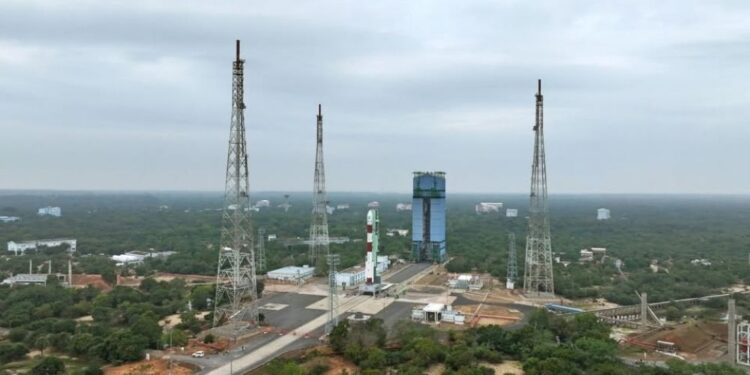
The nano satellite was carried by a rocket by the Indian Space Research Organization (ISRO), its first space mission of 2026. On January 12, 2026, at 10:18 am Indian time, Munal, along with 16 other satellites (EOS-N1 and 15 co-passenger satellites) were launched into space from the Satish Dhawan Space Centre (SDSC) in Sriharikota, Andhra Pradesh. The rocket had payloads from Brazil, the US, the UK, Spain, etc.

ISRO Chief Dr. V. Narayanan confirmed the failure of the rocket launch. He shared that the rocket launch failed in the third stage during its ascent. “The performance of the Polar Satellite Launch Vehicle (PSLV) rocket was normal till the end of the first and second stages. However, at the end of the third stage, there was a slight disturbance in the rotation speed of the rocket, after which it became unstable. We are analyzing the data.”
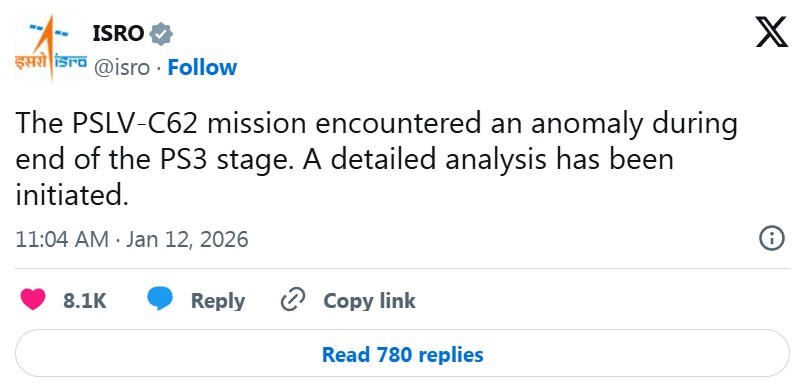
But he refrained from declaring the mission a success or a failure.
A dignitary consisting of Dr. Rabindra Prasad Dhakal, Secretary of the Nepal Academy of Science and Technology (NAST), and others went to India to observe the Munal’s launch.
Consecutive setback
The PSLV-C62 was en route to mark successful comeback after the previous failure in 2025. ISRO had overseen just one space launch in 2025, and that failed. The first of 2026 also couldn’t succeed, which now raises questions about capabilities.
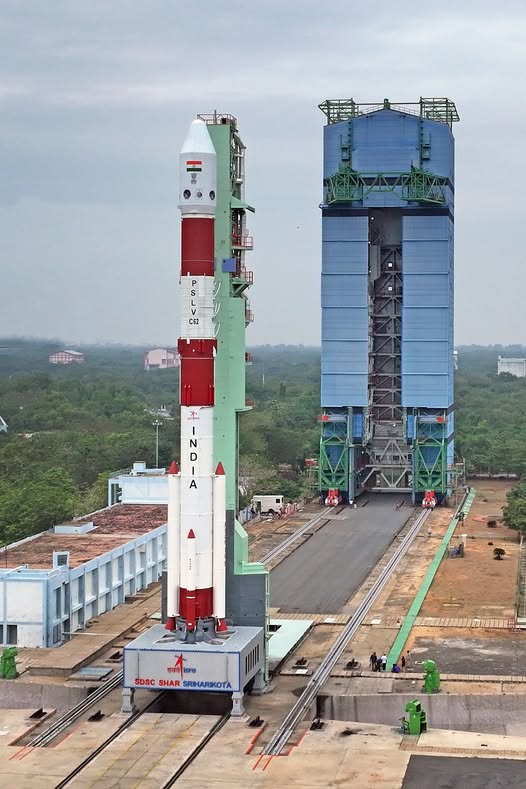
ISRO will conduct a failure analysis on PSLV-C62, which is a standard procedure after a mission fails.
As for the Munal satellite launch, ambitions were treated as a milestone. However, that will take a bit longer now with this setback.