Last Updated on June 6, 2026
Think about your everyday social media app – sharing photos, chatting, or shopping online. You think it’s innocent enough, but a record is generated of your clicking, searching, and posting. In a world that’s, more than ever, digitally scrutinized, and with every service asking you for information, it’s worth asking: how safe is your data online, especially if you live in Nepal?
The world is watching your data
The internet has simplified our lives. Whether it’s paying bills through eSewa, ordering meals, booking rides, or handling daily tasks, almost everything now depends on being connected. There are some conveniences of being connected, but it also brings the risk of exposing your data.

Levels of privacy vary from one region of the world to the next. For example, a 2023 global study by Surfshark found that only 2% of autocratic countries have sufficient privacy protections – meaning 98% don’t adequately safeguard their citizens’ data.
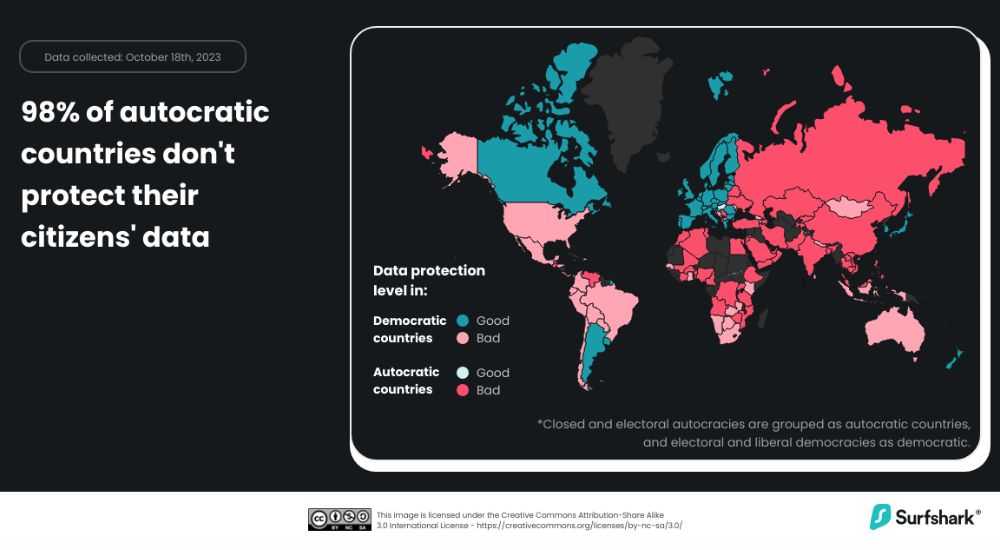
The image above illustrates these findings, showing through a world map how privacy safeguards differ greatly from one country to another.
What happens in Nepal
Nepal has initiated three laws: the Electronic Transactions Act (2008), the Individual Privacy Act (2018), and the Cyber Security Byelaw (2020), to enhance online security. These laws address basic digital legislative principles, yet controls are insufficient and there’s still no single legislative act that specifies how to manage one’s data.
As a result, many users are comfortable sharing personal information on social media and websites without confirming their information will be secure.
✅What is Mobile fraud and how to stay safe?
When breaches make headlines
A data breach happens when private information is accessed or leaked without permission. One notable case occurred in India, where personal information contained in government databases was made public online due to poorly configured security restrictions.
Nepal has had similar issues as well. There have been examples of hacker attacks on university and hospital systems, leading to disclosure of both student and patient data.
These examples point out additional problems with online threats that are present outside of corporations and wealthy nations.
Protecting yourself in a connected world
While it’s hard to avoid exposing your personal information on the internet, you can take steps to lessen your exposure:
- Make your passwords harder to hack: You should have a strong password unique for every account. Never use the same password for online accounts, even if it’s tempting to do so.
- Add protection beyond a log-in: Adding two-factor authentication to your accounts adds another layer of protection from unwanted access; enable it wherever possible.
- Use secure connections to browse: A VPN can protect your data by using the Surfshark servers to encrypt your connection. This can come in handy when you’re working remotely or traveling.
- Stay up to date with software updates: Keep your software up to date at all times; updates often include patches for new security exploits that hackers could be taking advantage of.
- Keep your guard up when using public networks: Be careful with the links you click and with using public Wi-Fi, especially in any kind of café, hotel, and airport. Using shared networks is less secure than private ones. Details on how to be safe while using public Wifi.
The idea isn’t to live in fear, but to stay aware and make small, daily choices to protect your information from being publicly accessible.
Looking ahead
The internet has created new opportunities for a digitally growing economy in Nepal, making entrepreneurship, education, and work more attainable. But with opportunity comes responsibility.
💥 Best Cyber Security Practices; how to secure from threats?
Data protection isn’t just about legislation or technological products, but about trust. Even with increased online presence, privacy will be an ongoing challenge – and being educated, as well as being mindful of your privacy today, may save you from a myriad of privacy challenges tomorrow.