Last Updated on May 4, 2026
Summary✨
- NEA (Nepal Electricity Authority) is establishing a telecommunications infrastructure company to enhance digital connectivity.
- The company will focus on FTTH networks, fiber expansion, and utility pole management, aiming for commercial use of telco equipment.
- NEA plans to lease its infrastructure to telecom operators and ISPs, seeking approval from the Nepal Telecommunications Authority.
- The initiative addresses issues like unorganized utility poles and inefficient coordination among stakeholders, enhancing telecom service expansion.
- NEA will hold 100% shares initially but is open to future investments while retaining majority ownership.
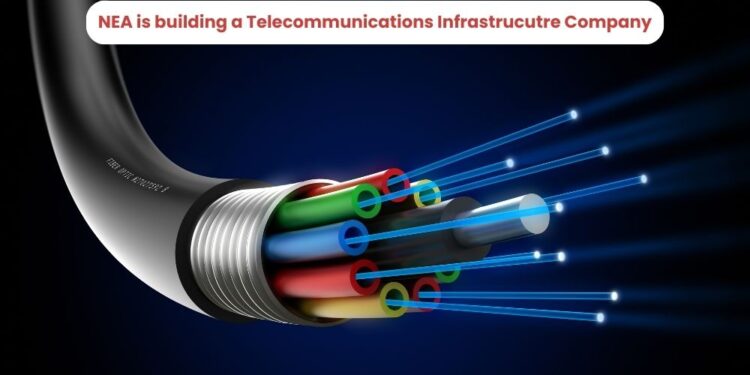
NEA (Nepal Electricity Authority) has brought into operation an ambitious telecommunications infrastructure company. The authority’s board meeting has set up a subsidiary company to work on bringing the idea of a telco infra firm to life.
The proposal for the company was approved by the NEA board. Managing Director Hitendradev Shakya has recently shared, “The board meeting has passed the proposal. However, the minutes have not been signed by the board members and have not yet been finalized. Whether the proposal has been changed or passed as is will be known only after the minutes are read.”

NEA’s decision to start a telecommunications infrastructure firm comes after a study by the Asian Development Bank (ADB). NEA holds extensive telecom infrastructure capability with high market value. Not only does the initiative hold huge financial prospects, but it also helps promote the digital Nepal vision.
Table of contents
What does the telecommunications infrastructure company do?
The telecommunication infrastructure company works on an FTTH network, fiber internet expansion, underground duct and fiber, utility poles, etc. More specifically, it will work on prospects of using telco gear for commercial purposes. The company operates its services to customers (ISPs/telcos) in a plug-and-play model, which removes the need for them to incur additional expenses on using poles, fiber, etc. NEA has established the company with its ownership and focus on the commercialization of telco equipment.
NEA will provide its infrastructure to telecom operators, ISPs/NSPs, and other stakeholders on lease. It will also take necessary approvals from Nepal Telecommunications Authority (NTA), which is the telecom regulator of the country.
After establishing the telco infrastructure company, NEA will bring in a strategic equity partner with financial, technical, and managerial experience.
The company eradicates multiple issues with telecom service expansion
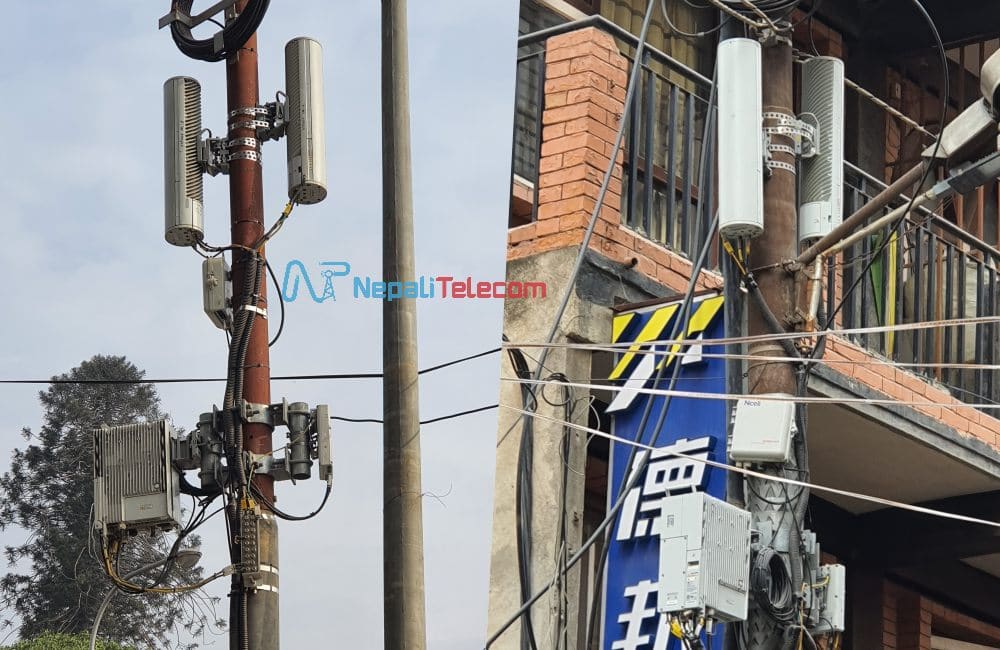
NEA feels that unorganized utility poles and a lack of coordination between stakeholders and government agencies are hurting telecom development. So, the authority believes that solving these hindrances requires the Nepal Digital Infrastructure Company. Already, NEA is laying cables underground in some major cities to keep cables underground. It seeks to use common ADSS (All-Dielectric Self-Supporting) cables to avoid cable clutter overhead.
Going forward, NEA seeks to coordinate with ADB and other relevant bodies to carry out its infrastructure company project. The subsidiary will have NEA’s 100% shares, while its authorized capital could be Rs 1 billion, and the issued capital Rs 50 crore.
The authority has kept doors open for future investment from other parties, but it will keep 51% of the shares. It will have seven directors in the telecommunication infrastructure company.
Also: 5G vs Fiber: Find Out Which Is Better?
Easing the burden for operators and ISPs
NEA’s telecom infra company will help ease the burden on the government, NTA, and service providers such as operators and ISPs. The company will oversee the operation of the FTTH network, telecom gear, and other equipment for telecom services. NTA has already started infrastructure sharing; however, the infrastructure company will also bring undeniable benefits to service providers. The company will help with the repair and maintenance of telco gear, help with expanding the fiber network, and will also bring in innovative practices for the industry.
At a time when the country’s telecom industry is showing more challenges than promises, NEA, being a government body, could bring relief and support the industry needs.
NEA’s telecommunications infrastructure company aims to improve digital connectivity and also solve issues like unmanaged poles and poor coordination in telecom infrastructure.
It will focus on FTTH networks, fiber expansion, underground ducts, and utility pole management.
Yes, it will lease infrastructure to telecom operators and ISPs.
The country’s whole telecom sector, including telecom operators, ISPs/NSPs, etc., will benefit from it.
Yes. Currently, it holds 100% shares; however, it’s open to investments and aims to lower ownership to 51% in the future.