Last Updated on March 1, 2026
Several Gulf regions issued a National Emergency Alert on Saturday, which had people’s mobile phones blaring an emergency alarm telling them to shelter safely after Iran started retaliatory strikes in response to US-Israel attacks. The instance shows how states can use telecommunication infrastructure to dispatch alerts to citizens in a critical time that can potentially be life-saving.
The State of Qatar, Abu Dhabi, etc., sent mobile alerts requesting their citizens to stay away from military areas and remain inside the buildings.
Qatar’s messages read, “In the interest of public safety, we urge everyone to stay away from the premises of military sites, remain inside buildings or safe locations, and not go out or move around except in cases of extreme necessity, to avoid exposure to any risks.”
As the alerts were activated, viewers could also watch TV news presenters’ phones buzzing. CNN (Abu Dhabi) and Al Jazeera English (Doha) were temporarily interrupted as presenters’ phones blared with emergency alerts.
Also: How to Get Earthquake Alerts on Your Phone?A Complete Guide
How is the emergency alarm sent to mobile phones?
In a time of war, natural disasters, or other major threats to public safety, this is a general way how states dispatch emergency alerts to people’s phones:
- The government/government agency/ministry activates the national emergency alert system
- The alert is then sent to telecom operators
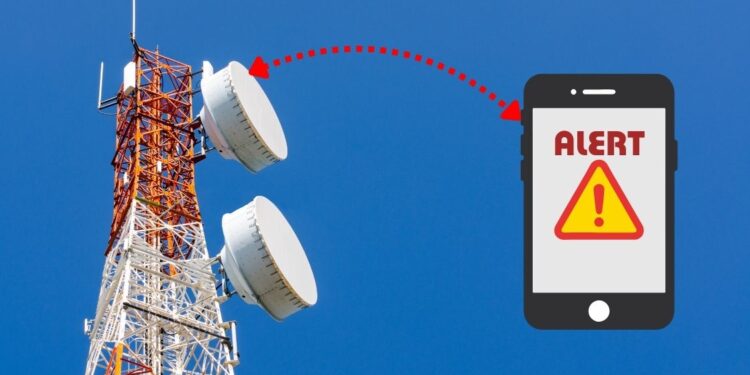
- The telcos use Cell Broadcast technology to transmit the alert
- The alert/alarm is issued via towers, so phones connected to the concerned towers blare the alert sound
NOTE: The emergency alarm can be triggered even if the phone is locked, switched off, or is in silent mode. The alert is activated not through a third-party app but by the OS of the phone. Every smartphone comes with an emergency system that telcos can use to issue a siren/alarm to alert the public.