
Last Updated on January 6, 2026
With a whole year ahead of us, there are some breakthroughs to expect in 2026 in telecommunication industry. This could be the year we finally get 5G access, while 4G will get all Nepal coverage. We will also see legacy networks become further irrelevant. But there are more beyond mobile network affairs to look for. 2025 didn’t bring many fireworks, but we may have some milestones in 2026. This post gets you all the major possibilities in Nepal’s telecom industry in 2026.
Table of contents
Major Telecom Expectations in 2026
5G birth
2026 is very likely to see the birth of commercial 5G in Nepal. According to Nepal Telecom (NTC) MD Sabina Maskey Pradhan, the company is at work to start 5G in Kathmandu and Pokhara. She said that the company, at the moment, has requested NTA for spectrum for the next-gen network and will soon start procurement of necessary equipment for the network. Since the trial in 2079 came to a halt, we’ve been waiting for the access. Now that more people have 5G phones, we just can’t wait any longer. And hey, this could be that landmark year to see the rollout of 5G.

4G goes all-Nepal
At present, Ntc 4G coverage has extended over 98% of local levels, while Ncell’s is available in over 95% of local bodies. The broadband cellular network is very likely to hit blanket coverage across the country in the first half of 2026. 4G brings faster data service to 3G, and so far, it has been a major vehicle for the digital transformation of the country and digital inclusion. Though 4G speed is factored by different aspects, it continues to be extremely relevant before 5G swoops in. Also, it’s possible that Ntc and Ncell consider using 4G infrastructure for 5G; the full coverage of 4G is helpful for the operators too. By the way, check out the factors that affect 4G speed.
Bye bye 3G, 2G
While 4G will grow further, legacy networks such as 3G and 2G will become more Ncell is near to complete its 3G shutdown, and Ntc has also started phasing out 2G in the 1800 MHz band. The telcos will use the freed-up resources for 4G and 5G in the future while also saving on repair and maintenance on older-generation networks. But 2G will remain in Nepal in some form to mitigate the lack of 4G in some areas. Gist is, more areas will see 3G and 2G cut off from their nearby cell towers in 2026 for good.
AI use gets wider
In August 2025, the government of Nepal, under the PM Sushila Karki, approved the National Artificial Intelligence (A.I.) Policy, 2025. Now that AI has received formal recognition for its implementation, startups, the service sector, telecom, etc., will likely implement its use further. It also aims at producing employment, skilled human resources, and promoting innovation. Obviously, we don’t want AI to dominate with content that is fake, misleading, or wrong. But AI can boost efficiency, speed, and encourage innovation. 2026, therefore, will be a key year for AI, rules and regulations, and its implementation across services in the country.
Fiber user growth
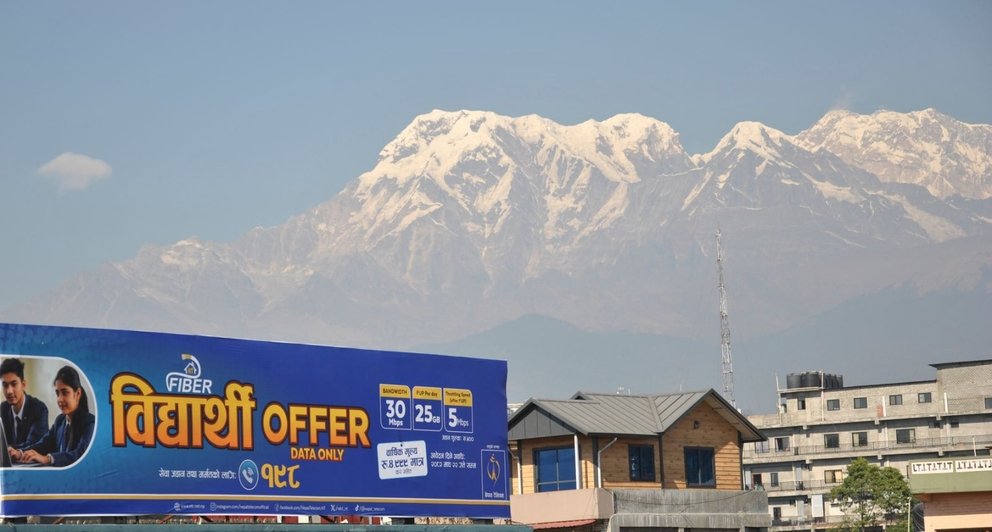
If cellular has 4G, fixed has fiber, and it will continue to thrive in 2026. NT has extended FTTH in 77 districts, which is great. But ISPs are not behind either. They are also expanding services to more areas and will do so throughout 2026. Currently, there are over 33.41 lakh fiber users with 50.08% ofthe population penetration for fixed broadband service access. This should grow as WorldLink, NT, Vianet, and co. continue to expand their market presence.
WorldLink and ISPs will continue to dominate
In 2026, WorldLink and other top ISPs will continue their dominance. It could as well be that WorldLink reaches 11 lakh customers at later part of the year. Dish Home and NT are also accumulating huge user base so that will continue across other players as well. We have heard all sorts of things on Classic Tech, but there’s not much solid coming. We may get a definitive update on the ISP regarding its license renewal, bandwidth due payment, and more.
Telco policy changes
Nepal’s governing Telecommunications Act 2053 has been criticized for not being consistent with modern day industry, especially when the country’s telco sector is losing revenues. Experts maintain that heavy taxes, exorbitant license renewal fees, spectrum fees, etc., have stagnated the industry, unlike ISPs that don’t have to pay for airwaves. These costs and limited revenue potential might have also caused a delay for the 5G launch. That is why the government, NTA, telcos, and stakeholders may try to negotiate necessary amendments to uplift the industry again.
Also: Ncell CEO Michael Foley calls for 4G improvement before 5G rollout
Conclusion
After a rather bleak 2025 for the telecom industry, there are milestones to see and records to be made in 2026. But that all will transpire if everything goes to plan. In particular, with the 5G launch. We can’t forget that, without much fluff, VoWiFi, VoLTE, eSIM, etc., are also transforming our daily habits with mobile services. Anyway, here’s to a potentially greater and grand year of 2026 for the telecom industry in Nepal.